

Table of Contents
Forex Trading for Beginners: Master the Market Boldly
Forex trading for beginners can feel like trying to learn a new language while standing on the floor of a crowded stock exchange. It’s fast, it’s loud, and the stakes are real. But here is the truth: every successful trader you see today started exactly where you are—staring at a screen, wondering what a “pip” is and why the Japanese Yen is suddenly moving so fast.
Trading isn’t just about charts; it’s about psychology, discipline, and having a roadmap that keeps you from driving off a financial cliff. If you’ve been looking for a way to enter the currency markets without losing your shirt in the first week, you’re in the right place.
1. Understand the “Why” Before the “How”
Before you download a trading platform or deposit a single dollar, you need to understand the mechanics of the market. The foreign exchange market is the largest financial market in the world, with trillions of dollars changing hands daily.
What is Forex, Really?
At its core, forex is the act of buying one currency while simultaneously selling another. You are betting on the economic health of one nation against another. When you trade the EUR/USD, you’re essentially asking: “Is the Eurozone doing better than the United States right now?”
Why Beginners Struggle Early
Most newbies treat forex like a casino. They see high leverage and think they can turn $100 into $10,000 by next Tuesday. This “lottery ticket” mindset is the fastest way to blow an account. Real trading is a business, and like any business, it requires an education. forex trading for beginners.
Internal Link Suggestion: Read more on our website about building a sustainable financial mindset for long-term growth.
2. Choosing a Broker That Won’t Fail You
Your broker is your only lifeline to the market. Choosing the wrong one is like trying to win a car race with a lead anchor attached to your bumper. For forex trading for beginners, your priority should be safety and regulation, not flashy bonuses.forex trading for beginners.
Look for Regulation
Never, under any circumstances, use an offshore broker that isn’t regulated by a major body. Look for oversight from:
- The CFTC or NFA (United States)
- The FCA (United Kingdom)
- ASIC (Australia)
Check the Spreads and Fees
Brokers make money through the “spread”—the difference between the buy and sell price. High spreads eat your profits before you even get started. forex trading for beginners.
- Image Suggestion: A screenshot of a clean, user-friendly trading interface showing a currency pair quote.
- Alt Text: A beginner-friendly dashboard for forex trading for beginners showing EUR/USD spreads.
3. Start with a Demo Account (The “Flight Simulator” Phase)
You wouldn’t try to fly a Boeing 747 without hours in a simulator, right? The same applies to the markets. Most reputable brokers offer demo accounts filled with “paper money.” forex trading for beginners.
The Benefits of Paper Trading

- Learn the Platform: Figure out where the “Buy” and “Sell” buttons are so you don’t make a $500 mistake by clicking the wrong thing.
- Test Your Strategy: See if your logic actually holds up when the market starts moving.
- Zero Risk: You can lose a million “pretend” dollars and still sleep like a baby.
Pro Tip: Treat your demo account like real money. If you take reckless risks because “it’s not real,” you’ll develop bad habits that will haunt you when you finally go live. forex trading for beginners.
4. Master One Strategy at a Time
The biggest mistake in forex trading for beginners is “strategy hopping.” Traders try one method, lose two trades, and immediately dump it for a new “shiny” indicator. This is a cycle of doom.
Price Action vs. Indicators
- Price Action: Reading the raw movement of the candles. It’s like reading the tracks of an animal in the woods.
- Indicators: Tools like the Relative Strength Index (RSI) or Moving Averages. These are helpful, but they are “lagging”—they tell you what happened, not necessarily what will happen.
Pick one simple strategy, like trading “Support and Resistance” levels, and stick to it for at least 50 trades. Consistency is the only way to measure success. forex trading for beginners.
5. Risk Management: The Golden Rule
If you ignore everything else in this guide, remember this: Never risk more than 1% to 2% of your total account balance on a single trade.
The Power of the Stop-Loss
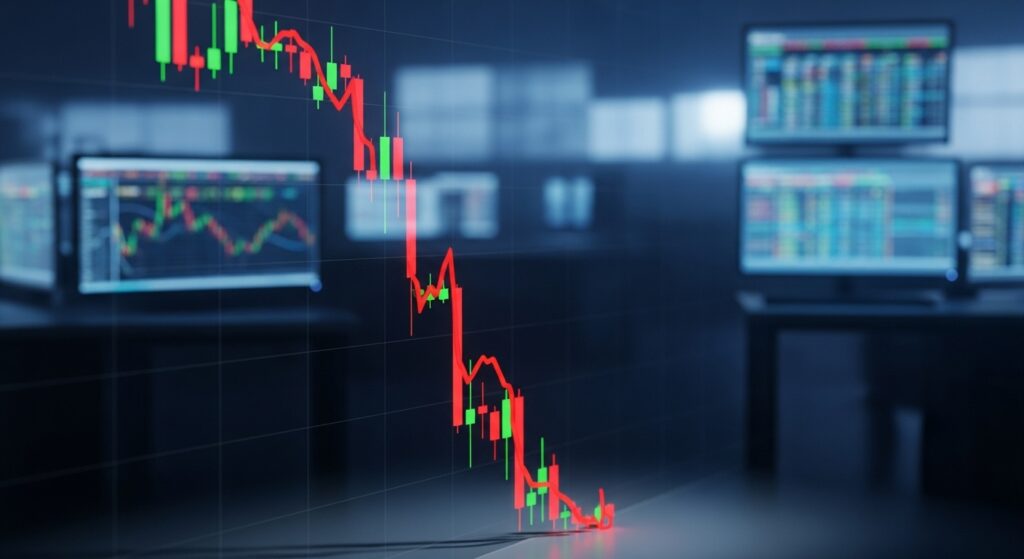
A stop-loss is an automatic order that closes your trade if the market moves against you. It is your safety net. Without it, a single market spike (like a sudden political announcement) could wipe out your entire account in seconds.
Understanding Leverage
Leverage allows you to control large amounts of money with a small deposit. While it sounds great, it’s a double-edged sword. High leverage magnifies gains, but it also magnifies losses. For forex trading for beginners, keep your leverage low (1:10 or 1:30 at most) until you know what you’re doing.
6. Keep a Trading Journal
You cannot improve what you do not measure. A trading journal is a log of every trade you take, why you took it, and how you felt at the time.
What to Record:
- Date and Time: When did the trade happen?
- The Pair: e.g., GBP/JPY.
- The Logic: “Price hit a major resistance level on the 4-hour chart.”
- The Outcome: Profit or loss?
- The Emotion: “I felt anxious and closed the trade too early.”
Over time, your journal will reveal patterns. You might realize you always lose money on Friday afternoons, or that you’re much better at trading the Great British Pound than the Euro. This data is gold.
7. Control Your Emotions (The Hardest Part)
The market doesn’t care about your feelings. It doesn’t know you have a mortgage or that you really want a new car. Successful forex trading for beginners requires a “mechanical” mindset.
Fear and Greed
- Greed: Causes you to stay in a trade too long, hoping for “just a bit more,” only to watch the profit vanish.
- Fear: Causes you to hesitate and miss a perfect setup because you’re afraid of losing.
According to research on investor psychology from the SEC, emotional decision-making is the primary reason retail traders fail. You must learn to trade what you see, not what you feel.
Internal Link Suggestion: Read more on our website about overcoming anxiety and staying focused during high-pressure tasks.
Developing a Long-Term Edge

Forex is not a “get rich quick” scheme. It is a skill that takes time to hone, much like learning to play an instrument or becoming a surgeon. You will have losing days. Even the best traders in the world have losing streaks. The difference is that they don’t let a losing day turn into a losing life.
Continuous Education
The global economy is always shifting. Stay updated with reliable news sources. Organizations like the International Monetary Fund (IMF) provide deep insights into global economic health, which can help you understand the long-term trends of different currencies.
Additionally, understanding how central banks—like the Federal Reserve—adjust interest rates is crucial, as these rates are the primary drivers of currency value.
Conclusion: Your First Step Forward
Taking the leap into forex trading for beginners is an exciting journey, but it’s one that requires a humble heart and a disciplined mind. Remember, the goal for your first six months shouldn’t be to make a million dollars; it should be to not lose your capital. If you can survive the learning curve, the profits will eventually follow.
Be patient with yourself. You’re learning to navigate the most complex machine ever built by man—the global economy. Take it one “pip” at a time, keep your risks small, and never stop learning.
What is the one thing holding you back from placing your first demo trade today? Drop a comment below or take a moment to write down your biggest trading fear—identifying it is the first step to conquering it.